






















Legal
Legal translation and court interpreting that stand up to scrutiny
In litigation and cross-border law, there is no room for approximate meaning. Law firms and legal departments rely on us for certified translations, court and deposition interpreters, multilingual discovery, and patent filings, delivered confidentially in 250+ languages.

Certificate of translation accuracy
Share Purchase Agreement German → English · 46 pp.
- Translated by a legal specialist
- Reviewed by a second linguist
- Certified and formatted to match
Illustrative example
- 250+LanguagesIncluding rare languages and regional dialects
- 2Linguists per contractA legal translator, then an independent second-linguist review
- On-siteOr remoteInterpreters for depositions, hearings, and arbitrations
- NDAOn every matterSecure portal, background-checked linguists, cleared linguists available
Trusted by law firms including






Legal language services
Start with the matter, not the service
Choose the kind of work in front of you to see what we deliver and which services support it.
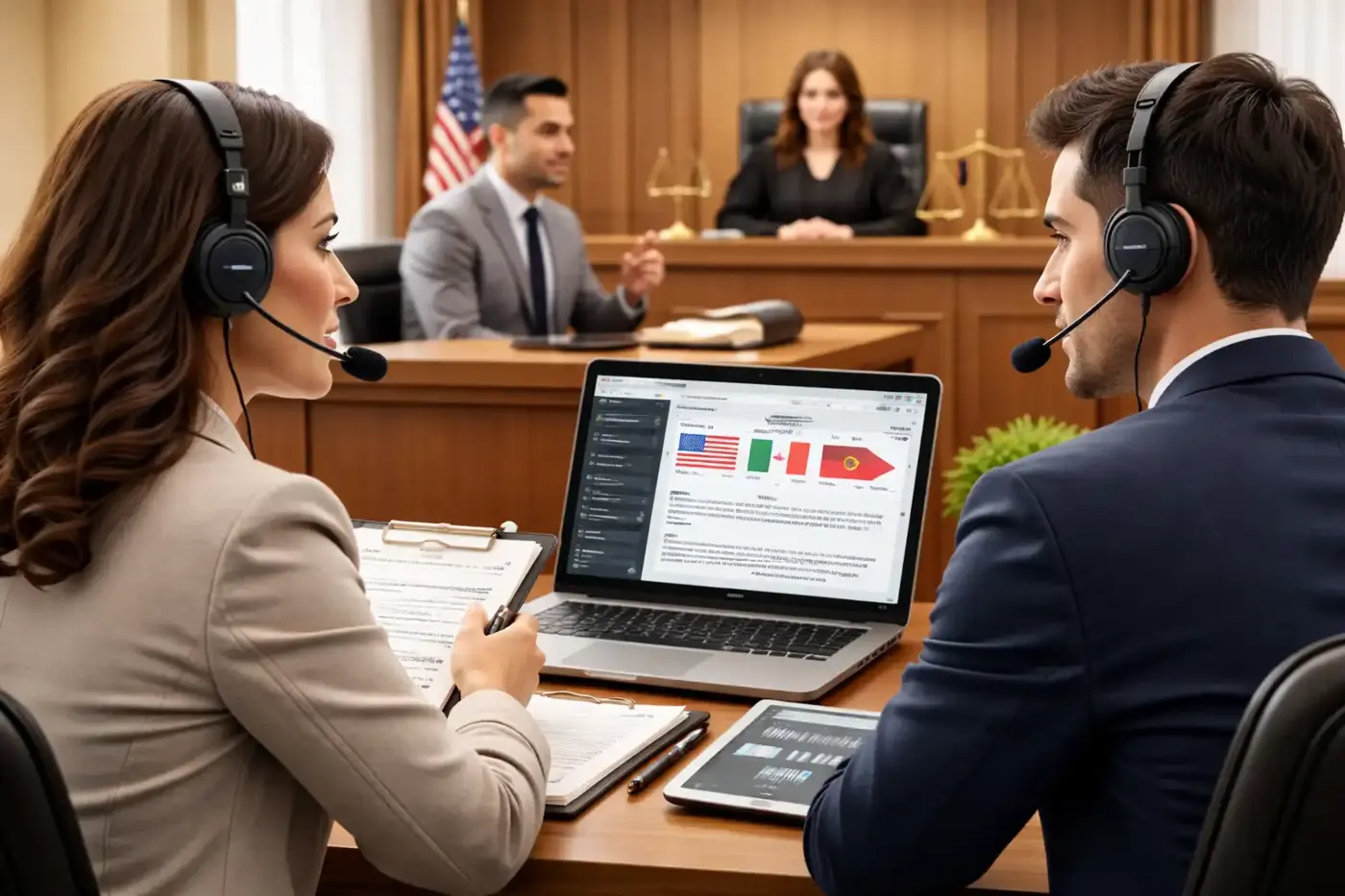
Depositions, hearings, and trials
Real-time, accurate interpreting that respects the formality of the proceeding, and translated exhibits your team can rely on.
- Consecutive interpreting for depositions and witness testimony
- Simultaneous interpreting for hearings, trials, and arbitrations
- Certified translation of exhibits, pleadings, and judgments
- Transcription and translation of recorded evidence
Related servicesOn-site interpretingVideo remote interpreting
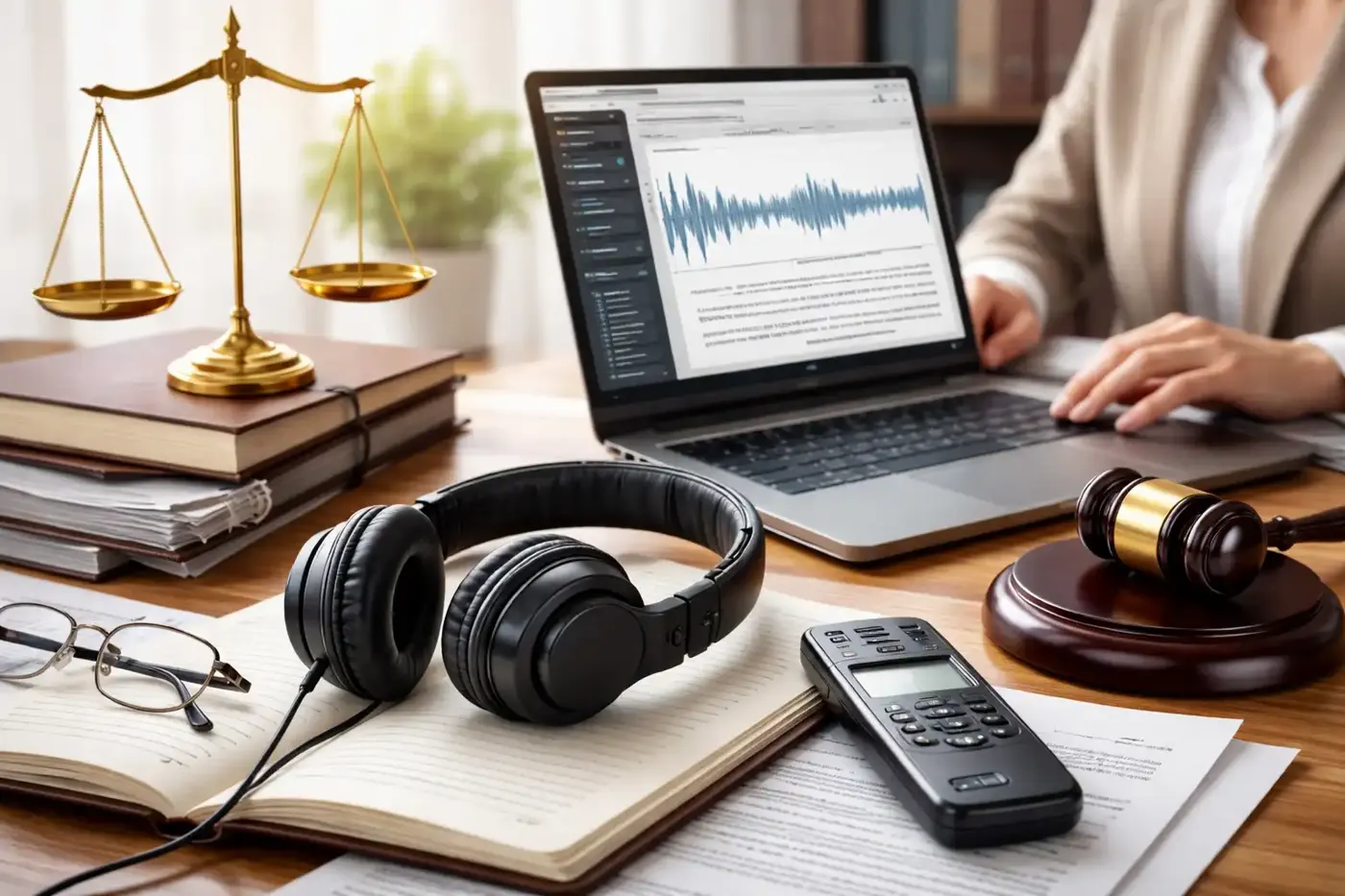
Multilingual discovery and document review
High-volume review on court-mandated deadlines, so your team finds the documents that matter quickly and nothing critical is lost in translation.
- Rapid first-pass review of foreign-language evidence
- Full certified translation of key documents
- Translation memory and dedicated project managers for scale
- Consistent terminology across reviewers and productions
Related servicesDocument translationMachine translation post-editing

Contracts and global agreements
Every clause keeps its legal intent across jurisdictions, from M&A documents to employment agreements and commercial contracts.
- M&A documents and due diligence materials
- Employment agreements and corporate policies
- Cross-border commercial contracts
- Two-linguist review of terms of art and jurisdictional nuance
Related servicesDocument translationRegulated translation

Patent filing support
Linguists who combine legal and technical expertise translate claims with the exactness international filings require.
- Technical specifications and claims
- Prior art in other languages
- Consistent terminology across patent families
- Subject-matter experts in STEM fields
Related servicesDocument translationRegulated translation
Delivery options
Interpreters for every legal setting
How the interpreter joins depends on the proceeding. These are the typical choices; we confirm the right one with you when you book.
Interpreting docket
Typical arrangements by proceeding, confirmed with you at booking
| No. | Proceeding | Interpreter | Style | Note for counsel |
|---|---|---|---|---|
| No. 1 | Deposition, in person | On-site interpreter | Consecutive | Share exhibits and case terminology in advance. |
| No. 2 | Remote deposition | Video remote interpreter | Consecutive | The interpreter joins your platform. Test the link before the record opens. |
| No. 3 | Hearing or trial | On-site interpreter team | Consecutive and simultaneous | Long proceedings use two interpreters who alternate. |
| No. 4 | Arbitration or mediation | On-site or remote | Consecutive and simultaneous | Several languages may need booths or remote channels. |
| No. 5 | Attorney–client meeting | Phone, video, or on-site | Consecutive | Phone works well for short, scheduled check-ins. |
Consecutive. The speaker pauses and the interpreter renders each segment, which keeps a clean record for testimony.
Simultaneous. The interpreter speaks a second or two behind the speaker, which keeps long hearings and multi-party arbitrations on schedule.
Defensible accuracy
Two linguists on every contract
A single translator can miss a term of art. Every contract is translated by a legal specialist and then reviewed by a second linguist, so jurisdictional nuance is captured before it reaches opposing counsel or a court.
Translators are matched to the practice area, and many hold legal degrees or have extensive experience in it.
Legal specialist translates
A translator experienced in the relevant practice area translates the document.
Second linguist reviews
An independent linguist proofreads it against the source for terms of art and jurisdictional nuance.
Certified and formatted
We issue a certificate of translation accuracy and match the layout of the original.
Delivered securely
Files return through our encrypted client portal, never by open email.
Who we work with
Built for every seat at the table
What each part of a firm or legal department gets from working with one legal language partner.
Managing partners
Lower malpractice risk and protect the firm’s reputation across every jurisdiction.
Legal operations
Streamlined discovery workflows and predictable, transparent pricing for large projects.
General counsel
Regulatory compliance and consistent contract management across global entities.
Privilege, protected
Every linguist signs an NDA and is background-checked. Files move through an encrypted client portal, and Secret and TS-cleared linguists are available for sensitive matters.
Case studies
Results for law firms
How firms have used our interpreters and translators on real matters.
-
 Legal
Legal Holland & Hart LLP
We provided certified on-site consecutive interpreters, even in remote locations like Aspen, Colorado. Read the case study -
 Legal
Legal Bull & Davies, P.C.
We provided certified document translation services, ensuring that all legal documents were translated accurately and in compliance with local legal standards. Read the case study -
 Legal
Legal Bachus & Schanker
We provided certified on-site Nepali interpreters to facilitate communication during legal proceedings, such as depositions, client meetings, and court hearings. Read the case study
Request a secure quote
Tell us about the matter. We’ll scope it with you.
Share the languages, the documents or proceeding, and your deadline. We confirm the linguists, the timeline, and the price before work begins.
Court-mandated deadline? Say so up front. We staff discovery and urgent filings around the date you give us.
Legal requestExample details
- Matter
- Commercial arbitration
- Need
- Spanish exhibits, 2 deposition days
Explore more
Related services
Interpreting, translation, and transcription for every stage of a matter.
FAQ
Legal translation and interpreting, answered
Don’t see your question? A language specialist can answer it in one call.
Talk to a specialist
Get a straight answer
Tell us what you need translated or interpreted, and we’ll scope it with you.
Meet one-on-one with a language services expert, at a time that suits you.
How do you ensure the accuracy of contract translation?
Every contract goes through a two-layer review: a legal specialist translates it, and a second linguist proofreads it against the source so terms of art and jurisdictional nuances are captured correctly.
Do you provide interpreters for remote depositions?
Yes. We provide on-site and remote interpreters for depositions, hearings, and arbitrations. They are trained in the protocols of legal proceedings, so the record stays clear and accurate.
What is a certified legal translation?
A certified translation comes with a signed certificate of translation accuracy stating that the translation is complete and accurate to the best of the translator’s knowledge. Courts, agencies, and opposing counsel often require one. Some jurisdictions add requirements such as notarization, so tell us where the document will be filed.
Can your team handle large-scale discovery under tight deadlines?
Yes. Translation memory and dedicated project managers let us process high-volume foreign-language document review so your team can meet court-mandated discovery deadlines.
What is the difference between consecutive and simultaneous interpreting in legal settings?
In consecutive interpreting, the speaker pauses and the interpreter renders each segment, which is typical for depositions and witness testimony. In simultaneous interpreting, the interpreter speaks almost at the same time as the speaker, which keeps hearings, trials, and multi-party arbitrations moving.
Do you translate patent filings?
Yes. Linguists with technical subject-matter expertise translate specifications, claims, and prior art with the exactness international patent filings require.
How do you protect attorney–client privilege?
Every linguist is background-checked and signs a non-disclosure agreement, files move through our encrypted client portal, and access is limited to the people working on your matter. Secret and TS-cleared linguists are available for sensitive matters.
Do you translate audio and video evidence?
Yes. We transcribe recorded interviews, calls, and proceedings and translate the transcripts, so foreign-language recordings can be reviewed and used as evidence.
Tell us what’s at stake. We’ll show you how we’d handle it.
Send your files or describe your event. A language specialist replies with a fixed quote and a delivery date, with no obligation.
Prefer to call? 720-325-0459