






















Remote simultaneous interpretation
Remote simultaneous interpretation, live in every language your audience speaks
RSI services for virtual meetings, webinars, town halls, and hybrid events on Zoom, Microsoft Teams, Webex, and dedicated RSI platforms. Professional interpreter teams, rehearsed and monitored, in 250+ languages, from Denver and Washington, D.C., to audiences worldwide.
- Zoom, Teams, and WebexPlus dedicated RSI platforms for large events
- Two interpreters per languageFresh voices from the first minute to the last
- Rehearsed and monitoredA technician watches every channel, live
- Secure and federal-readyA GSA contract holder, with cleared interpreters for sensitive sessions
The signal chain
Remote interpretation is only as good as its weakest link
Sound travels from the speaker, through your platform, to the interpreter, and back to every listener. We secure each link before your event goes live.
-
Speaker
What can go wrong: A laptop microphone in an echoing room. Interpreters cannot interpret what they cannot hear clearly.
Our control: A tech check with every presenter, with headset or external microphone guidance before the event.
-
Platform
What can go wrong: Interpretation is not switched on, or the meeting type does not support it, and no one finds out until the event starts.
Our control: We confirm the platform, license, and meeting settings, then run a full rehearsal with interpreters.
-
Interpreters
What can go wrong: One interpreter works alone for two hours on home Wi-Fi. Accuracy and audio both degrade.
Our control: Two interpreters per language, handing over at regular intervals, on wired internet and professional headsets.
-
Listeners
What can go wrong: Attendees cannot find their language, or hear the speaker and the interpreter at once.
Our control: Clear joining instructions in every language and a technician monitoring every channel live.
Platforms
Interpretation inside the meeting you already use
Your attendees join the way they always do and choose their language from the meeting menu. We configure the platform and run the interpreters.
Zoom
Built-in language interpretation for meetings and webinars. Interpreters are assigned to language channels and attendees pick theirs from the interpretation menu.
Microsoft Teams
Language interpretation in supported meeting types. We help your IT team confirm licensing and settings before the event.
Webex
Simultaneous interpretation channels in Webex meetings and webinars, set up and tested with your organizer.
Dedicated RSI platforms
For large conferences and hybrid events, specialist platforms add interpreter consoles, relay, and a listener app for in-room audiences.
Product names are trademarks of their owners. Features and limits vary by plan; we confirm what your account supports during scoping.
Language channels
One meeting, every language on its own channel
Each language gets its own channel and its own interpreter team. When no interpreter covers a language pair directly, relay interpreting routes it through a shared language, so every listener still hears it live.
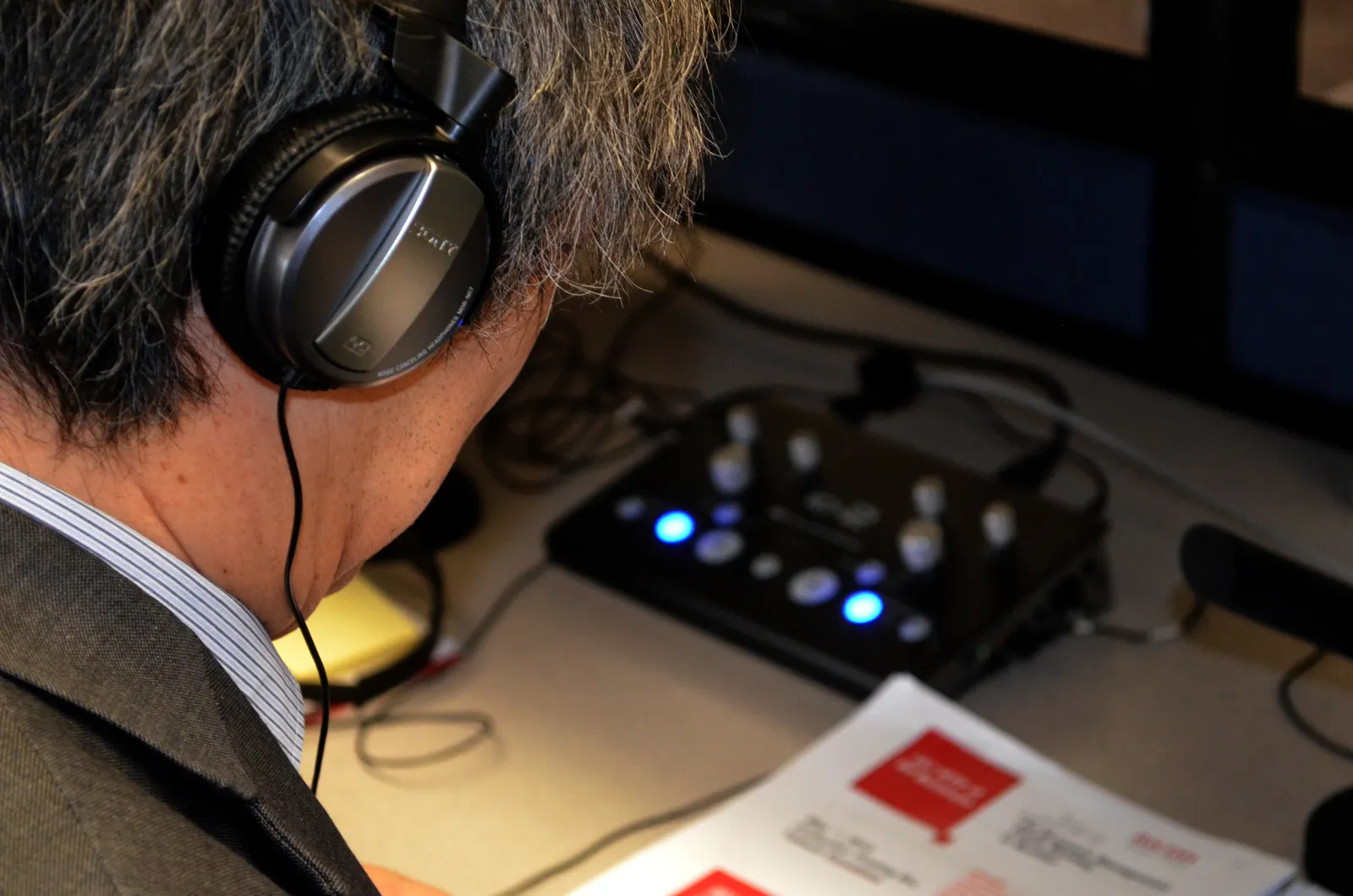
The interpreter’s booth, remotely
Professional sound starts on the interpreter’s side
Your audience hears exactly what your interpreters hear and say. That is why we hold remote interpreters to studio standards, not kitchen-table standards.
- Wired internet and a backup connectionNo relying on home Wi-Fi for a live event.
- Professional headsets and microphonesClean audio for listeners, and hearing protection for interpreters.
- Quiet, dedicated workspaceInterpreters work from professional studios or interpreting hubs.
- Teams of two per languageInterpreters hand over at regular intervals, typically every 20 to 30 minutes.
How it works
Your run of show, from kickoff to curtain
Every interpreted event follows the same countdown, so nothing is left to the morning of.
- T – 3 weeks
Scoping call
Languages, audience size, platform, agenda, and whether the event is virtual or hybrid.
- T – 2 weeks
Interpreters assigned
Two interpreters per language, matched to your subject, with relay planned where needed.
- T – 1 week
Materials and glossary
Slides, speaker notes, names, and terminology reach the interpreters.
- T – 2 days
Technical rehearsal
Interpreters, presenters, and our technician test audio, channels, and handovers on your platform.
- Live
Event day
A technician monitors every channel and stays in contact with your producer throughout.
Formats
Remote, hybrid, or on‑site: pick the right format
Many events mix formats. We recommend the setup that gives your audience the best experience at the right cost.
-
Remote (RSI)
Best for Virtual meetings, webinars, and global town halls
Interpreters work from professional studios or hubs and join your platform directly.
-
Hybrid
Best for Events with an in-room audience and remote attendees
Remote interpreters feed your venue sound system and the online stream at the same time.
-
On-site
Best for High-security meetings and events where interpreters must be in the room
Interpreters work from booths at your venue, with headsets and technicians.
On-site interpreting services
Plan your event
Tell us about your event. We’ll build the interpreting plan.
Share the date, platform, languages, and audience. We recommend team sizes and relay, confirm everything in writing, and give you a clear price.
Book three weeks ahead when you can. It leaves time for interpreter preparation and a full technical rehearsal. Shorter timelines are often possible; ask us.
Event briefExample details
- Event
- Quarterly global town hall
- Date and length
- Tuesday, 90 minutes
- Languages
- Spanish, French, Japanese
- Audience
- About 1,200 attendees
Related services
More ways to bridge languages live
One team for every interpreting format.
FAQ
Remote simultaneous interpretation questions, answered
Don’t see your question? A language specialist can answer it in one call.
Talk to a specialist
Get a straight answer
Tell us what you need translated or interpreted, and we’ll scope it with you.
Meet one-on-one with a language services expert, at a time that suits you.
What is remote simultaneous interpretation (RSI)?
Remote simultaneous interpretation is live interpretation delivered over the internet. Interpreters work from a remote location, hear the speaker through your meeting platform or an RSI platform, and interpret in real time while attendees choose their language from a menu or an app. It brings conference-style interpretation to virtual meetings, webinars, and hybrid events without booths or interpreter travel.
How does interpretation work in Zoom?
Zoom meetings and webinars on eligible paid plans include a language interpretation feature. The host assigns interpreters to language channels when scheduling or during the meeting, and attendees select their language from the Interpretation menu, with the option to mute the original audio. Features and limits vary by plan and meeting type, so we confirm your account settings during scoping.
Does Microsoft Teams support live interpretation?
Yes. Teams offers language interpretation in supported meeting types, such as scheduled meetings and webinars. It is not available in every meeting type, for example breakout rooms. We work with your IT team to confirm licensing and settings, then run a rehearsal with the interpreters.
How many interpreters do I need for a virtual meeting?
Plan on two interpreters per language for most events. Simultaneous interpreting is intense work, so interpreters take turns, typically every 20 to 30 minutes, which keeps accuracy high for the whole event. Very short meetings may need only one interpreter per language; we recommend the right team size when you book.
What is the difference between simultaneous and consecutive interpretation?
In simultaneous interpretation, the interpreter speaks at the same time as the speaker, so the meeting runs at its normal pace. In consecutive interpretation, the speaker pauses and the interpreter renders each segment afterward, which roughly doubles the time. Simultaneous is the standard for conferences, webinars, and large meetings.
How much does remote simultaneous interpretation cost?
The price depends on the number of languages, the length of the event, the number of interpreters per language, the subject matter, and whether you need a dedicated RSI platform or technician. RSI avoids interpreter travel and booth rental, which on-site events require. Share your event details and we will send a clear quote.
What equipment do speakers need for RSI?
Speakers should use a wired headset or a good external microphone, a wired internet connection where possible, and a quiet room. Laptop microphones and unstable Wi-Fi are the most common causes of poor interpretation, because interpreters cannot interpret what they cannot hear. We test every presenter during the technical rehearsal.
Can RSI support hybrid events?
Yes. For hybrid events, remote interpreters can feed both your venue sound system, so the in-room audience listens through receivers or an app, and the online stream at the same time. We coordinate with your audiovisual team to set up the audio paths and test them before the event.
Can AI interpretation or live captions replace human interpreters?
Automated captions and AI speech translation can help with accessibility and low-stakes content, but they still make errors with names, terminology, accents, and nuance. For board meetings, government briefings, legal matters, and other high-stakes events, professional human interpreters remain the reliable choice. We can advise on combining the two.
How far in advance should I book interpreters?
Three weeks is ideal for most events. It allows time to match interpreters to your subject, share materials, and run a technical rehearsal. Shorter timelines are often possible, especially for common languages, so contact us even if your event is soon.
Tell us what’s at stake. We’ll show you how we’d handle it.
Send your files or describe your event. A language specialist replies with a fixed quote and a delivery date, with no obligation.
Prefer to call? 720-325-0459